Spec Compliant Isn't Sellable: Why Bulk Outdoor Shoe Sourcing Keeps Burning Buyers
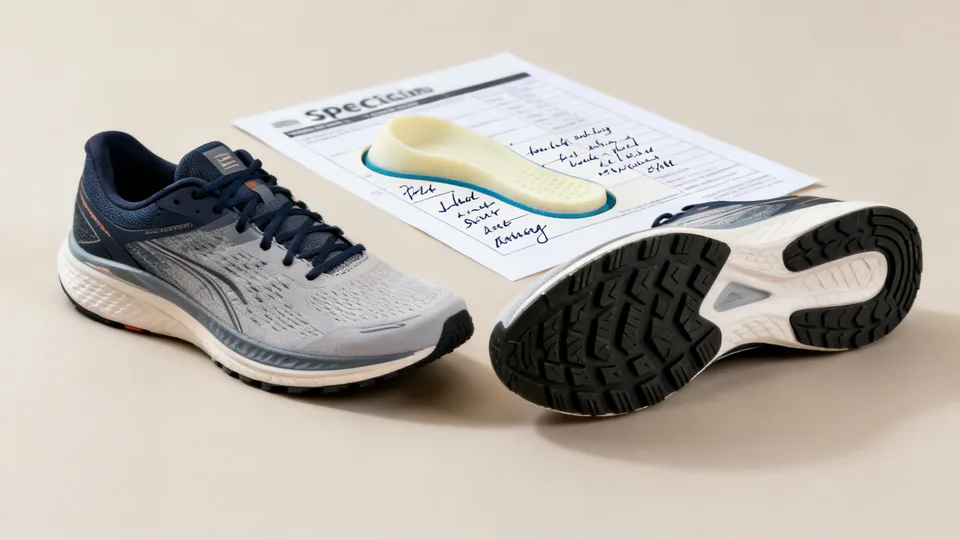
Last quarter I rejected 3,200 pairs of bulk athletic sandals. Every number on the spec sheet matched—strap width, sole thickness, color code, packaging. And I still sent them back.
Why? Because when I set them next to the retail sample, the strap flexed differently. Stiffer. Squeaked a little. Nothing that showed up on a report. But any customer who picked one up in a store would've felt it in about two seconds. The spec said "flexible EVA strap." The factory delivered EVA. It just wasn't the same EVA.
If you've sourced outdoor shoes for wholesale for more than a year, this probably isn't shocking. The factory isn't lying. Your QC report isn't wrong. And somehow the container still shows up with product you can't move at full price.
The problem you think you have
Most buyers I talk to frame this as a supplier problem. The factory cut corners. The agent went quiet. The samples looked great and the production looked... fine. Fine enough to ship, not fine enough to sell.
That framing isn't wrong, exactly. But it's not the whole story. I'm a quality and brand compliance manager at a footwear distribution company—I review every bulk order before it ships to our retail accounts, about 40 SKUs a month, and I rejected roughly 15% of first deliveries in 2024. Over four years of doing this, I keep watching the same failure pattern repeat across running shoes, hiking shoes, and sandals. The problem rarely starts at the factory. It starts upstream, in what we asked for and how we described it.
The real reasons your orders keep going wrong
"Standard" isn't a standard
Ask five factories what "waterproof" means and you'll get five answers. One means DWR coating on the upper. Another means a membrane. A third assumes you'll add a seam-sealed sock liner yourself. All of them are technically correct, and none of them match what your customer expects when they see the word on a hang tag.
The same applies to "flexible," "durable," "breathable," "non-slip"—every adjective on your spec sheet. Numbers travel across languages. Adjectives don't. If your spec relies on an adjective that isn't pinned to a test method, a photo reference, and a retained physical sample, you've given the factory permission to interpret. They will.
The spec sheet is where sourcing problems get created. The factory just finishes the job.
The sample-to-production gap is where trust dies
Here's a pattern I learned the hard way. In my first year I approved a sandal order based on the color swatch and a single pair. Cost us a partial redo—around $1,400 at the time. The lesson wasn't "inspect more." It was that samples and production runs are made on different tooling, by different operators, sometimes in different buildings. "Same specification" doesn't mean "same result" across factory lines. I assumed it did once. I don't anymore.
I'd also love to tell you I handled that first bad batch calmly. I didn't. I had 48 hours to sign off or the production slot went to another buyer on the schedule, and I approved based on a phone photo of a sample pair and a promise. In hindsight I should've pushed the timeline. But with a retail partner waiting, I made the call with incomplete information—and the redo invoice is how I learned what that costs.
Brand-authorized product is a different discipline
When you're buying adidas running shoes, the adidas men's D.O.N. Issue 7 basketball shoes, or any named-brand footwear for resale, the spec sheet is only half the job. The other half is provenance and authorization. This is the part where buyers get burned and don't find out until a retail partner or a customs broker starts asking questions.
I'm not a legal expert, so I can't speak to the contract language you should use. What I can tell you from a compliance perspective: the quality question ("is this what we ordered?") and the authorization question ("did we have the right to buy and resell this?") are two separate checks. Both have to pass. A perfect pair of shoes with unclear provenance is a liability, not an asset.
You're testing samples, not production
Almost every complaint I've handled in the last two years traces back to this: the buyer approved samples, never re-inspected production against a retained sample, and found out at the warehouse. There's a whole industry of standardized footwear test methods—ISO and ASTM both publish routines for flex resistance, slip resistance, and upper durability—but most bulk failures I see aren't test failures. They're perception failures. Nobody measured them because nobody thought to measure them.
What this actually costs you
In 2024, one redo on a 4,000-pair outdoor shoe run cost us roughly $22,000—freight, re-inspection, three weeks of margin we never recovered, plus a retail partner who now double-checks everything we send (fair enough). That's not a horror story. That's a Tuesday in bulk sourcing.
The softer costs are worse. Markdowns on inventory that "felt wrong." Chargebacks from retailers who won't name the reason. A brand impression you spend the next two seasons rebuilding. And the sneaky one: the orders you didn't win because a buyer remembered the last batch.
None of this shows up in a unit-price comparison. That's exactly why it keeps happening—the lowest quote looks like the lowest cost right up until the redo invoice lands. The upside of switching to that quote was about 12% off landed cost. The downside was what actually happened: a redo that wiped the savings out three times over. On paper, the math looked fine. In the warehouse, it never does.
How to actually choose outdoor shoes for wholesale
The fix isn't complicated, but it's unglamorous, and it will slow down your first order with any new supplier. That slowdown is the point.
- Write specs that survive translation. Every adjective gets a test method, a photo reference, and a retained physical sample. "Flexible" means "flexes X at Y pounds per method Z," or it means nothing.
- Qualify on one SKU before scaling. Run the full inspection cycle on a small order—including a pre-shipment inspection against your retained sample—before you commit to container volume.
- For named-brand product, verify provenance in writing. Ask the seller for the chain from authorized source to you. If they can't document it, treat the price as irrelevant. I say this as someone who's watched a "great deal" turn into a frozen warehouse.
- Budget the inspection into the quote. If your landed cost doesn't include a pre-shipment check, you've budgeted for hope.
Where this approach doesn't fit: if you're sourcing sub-$20 landed-cost sandals for a discount channel, this level of rigor will eat your margin—that's a real trade-off, not a cop-out. And if you're a first-time buyer placing 500 pairs, you likely don't have the leverage to demand a pre-shipment inspection. Start smaller, build the relationship, and earn the right to inspect.
My experience is based on roughly 300 mid-to-large bulk orders. If you're sourcing for ultra-premium outdoor specialty, your tolerances will be tighter than mine, and some of what I've said here will feel loose. Use it as a starting point, not a rulebook.
The honest version: there is no "best" outdoor shoe for wholesale. There's the pair your customer will actually pay for, and the supply chain that reliably gets it to them. The spec sheet is where you find out whether you have both—before the container leaves, not after.

Jane Smith
I’m Jane Smith, a senior content writer with over 15 years of experience in the packaging and printing industry. I specialize in writing about the latest trends, technologies, and best practices in packaging design, sustainability, and printing techniques. My goal is to help businesses understand complex printing processes and design solutions that enhance both product packaging and brand visibility.