How to Evaluate Athletic Sandals Manufacturers: Brand Supply vs. OEM, Compared Side by Side
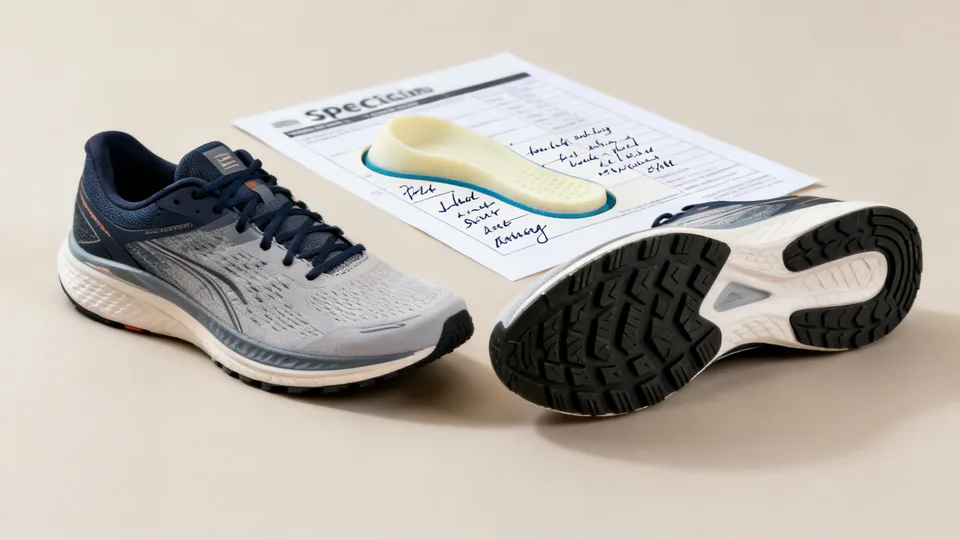
I've coordinated more than 200 rush footwear orders over the past six years. When a distributor calls me 36 hours before a container cutoff, there are only two real paths: brand-authorized supply (adidas running shoes through official channels, for example) or direct OEM manufacturing (the factories behind most outdoor shoes on the market).
Most sourcing guides tell you one path is "better." That's useless. They solve different problems.
Here's the framework I actually use. Three dimensions, compared side by side, no fence-sitting. If you're trying to figure out how to evaluate athletic sandals manufacturers or an outdoor shoes manufacturer for a real order, these are the three that decide whether your container ships on time.
Dimension 1: MOQ and Small-Order Flexibility
Brand-authorized supply: Minimums are usually set per SKU and per colorway. You want the adidas women's Duramo Speed 2 running shoes in three colorways? That's three minimums stacked. Authorization paperwork adds another layer before you see a price.
Direct OEM: Lower minimums are possible, but here's the part nobody tells you — "low MOQ" often means "low attention." A factory that advertises 100-pair minimums is usually running those orders through leftover capacity. Your 300-pair order gets scheduled around someone else's 30,000-pair program.
The counterintuitive finding, after six years of this: mid-size OEMs treat small orders better than the big factories do. A 300-pair order at a factory whose typical run is 2,000 pairs gets a dedicated line slot. That same 300 pairs at a factory running 30,000-pair programs gets squeezed into a gap. Guess which one ships with the right stitch count.
And on the small-order question itself — I'll say it plainly: a 300-pair test order is next year's 30,000-pair program. The vendors who treated my $2,000 trial orders seriously in 2019 are the ones I still call for six-figure POs. Small doesn't mean unimportant. It means untested.
Dimension 2: Lead Time and Emergency Capacity
Brand-authorized supply: Lead times are published, fixed, and rarely negotiable. If the official channel says 45 days, it's 45 days. There's no rush lane because the schedule is built around allocation, not urgency.
Direct OEM: Lead times are negotiable, which sounds great until you realize that "negotiable" cuts both ways. A factory that promises 15 days can also deliver in 15 days — half-finished.
In March 2024, a client called 36 hours before a container deadline needing 800 pairs of trail sandals re-routed. Normal turnaround was 21 days. We found an OEM with idle capacity and paid roughly $1,900 extra in rush fees on top of the base cost to compress production to 6 days and switch to air freight. The client's alternative was missing a retail placement window worth about $40,000.
The upside was protecting the placement. The risk was that compressed production skips QC steps. I kept asking myself: is $40,000 worth potentially shipping 800 pairs with a glue failure? We paid for a third-party inspection at the factory gate — about $280 — and it caught 14 defective pairs before they left. Worth every cent.
Verdict on this dimension: if the deadline is immovable, OEM wins on flexibility but only if you budget for independent inspection. Brand supply wins on predictability. Pick based on which failure you can survive.
Dimension 3: Quality Verification and Compliance
This is where the conventional wisdom breaks.
Most buyers assume brand-authorized supply is automatically safer. It isn't — not for your specific market. Compliance is destination-specific. A shoe that clears EU REACH requirements may still fail US state-level chemical disclosure rules. Brand channels certify for their primary markets; your market may not be one of them.
Direct OEMs, ironically, can be lower-risk here because they'll certify to your spec if you ask. Ask for the test reports, not the marketing deck:
- Slip resistance: ASTM F2913 is the standard test method for footwear traction. Request the actual report, not a claim.
- Quality management: ISO 9001 certification is a floor, not a differentiator. Verify the certificate covers the specific production line, not just the trading office.
- Chemical compliance: REACH for EU, and for shoe care OEM products, check restricted substance lists separately — adhesives and finishes have their own rules.
- Factory capability: SATRA membership and testing reports are a reasonable proxy for technical competence in footwear manufacturing. It's a UK-based footwear technology center, and their reports carry weight with most major buyers.
The surprise wasn't that OEM factories had gaps. It was how often the brand channel's paperwork didn't match my destination market's requirements. Neither path gives you compliance for free. Both require you to do the checking.
So Which Path Do You Take?
Scenario-based, because absolute answers are worthless here:
Go brand-authorized supply when: your retail buyers require brand recognition, your volumes clear the SKU minimums comfortably, and your deadline has zero flex. You're paying for predictability and brand pull. Don't expect rush accommodation.
Go direct OEM when: you're testing a market with small batches, you need custom specs, or your deadline requires a factory that will actually pick up the phone on a Saturday. Vet hard — test reports, factory-gate inspection, and a sample order before the real one.
Go hybrid when: you can. Brand supply for the hero SKUs that sell the range, OEM for the volume filler and the private-label test runs. Most of my clients who survived 2024's shipping chaos were running both.
One last thing. Whichever path you choose, the small-order question is the one most buyers get wrong. The factory or distributor that treats your 300-pair trial with the same seriousness as a 30,000-pair program is the one worth keeping. Everything else is a price list.
Prices and fees referenced are from specific 2024–2025 order records; verify current rates and compliance requirements with your destination market's authority before committing.

Jane Smith
I’m Jane Smith, a senior content writer with over 15 years of experience in the packaging and printing industry. I specialize in writing about the latest trends, technologies, and best practices in packaging design, sustainability, and printing techniques. My goal is to help businesses understand complex printing processes and design solutions that enhance both product packaging and brand visibility.