260 Pairs, 5 Days, and One 'Standard Spec' That Nearly Ruined Everything
Friday, 4:40 PM
I'm an order coordinator at a sporting goods distribution company. Over six years, I've handled 150+ rush orders — for regional sports retailers, university athletic programs, and a few soccer cleats manufacturers who needed last-minute volume fills.
I thought I'd seen everything.
Then on March 15, 2024, at 4:40 PM on a Friday, my phone rang.
On the other end was the procurement manager of one of our largest retail accounts — a regional sporting goods chain that supplies roughly twenty university athletic departments across the Southeast. Their summer track-and-field series was launching the following Monday. They needed 200 pairs of adidas running shoes and 60 pairs of adidas basketball shoes in their main warehouse by Tuesday noon.
Our normal turnaround: 21 days from order entry to dock departure.
We had 5. Two of them were a weekend.
I hung up the phone and sat there for a second. This was doable, I told myself — but only if every single detail was locked down before we moved a single box out the door.
That "if" turned out to be the hard part.
The Scramble
By Friday night, I'd mapped out what we could pull from our primary warehouse: 150 pairs of running shoes (white/light-grey colorway, exactly what their spring display called for) and all 60 pairs of basketball shoes from a regional depot.
Saturday morning, I got the factory to commit to the last 50 pairs of running shoes for Monday morning pickup. Tight, but workable.
Then came the part I wish I'd handled differently.
Their order email said, "For the rest, just send the standard size run and colorway."
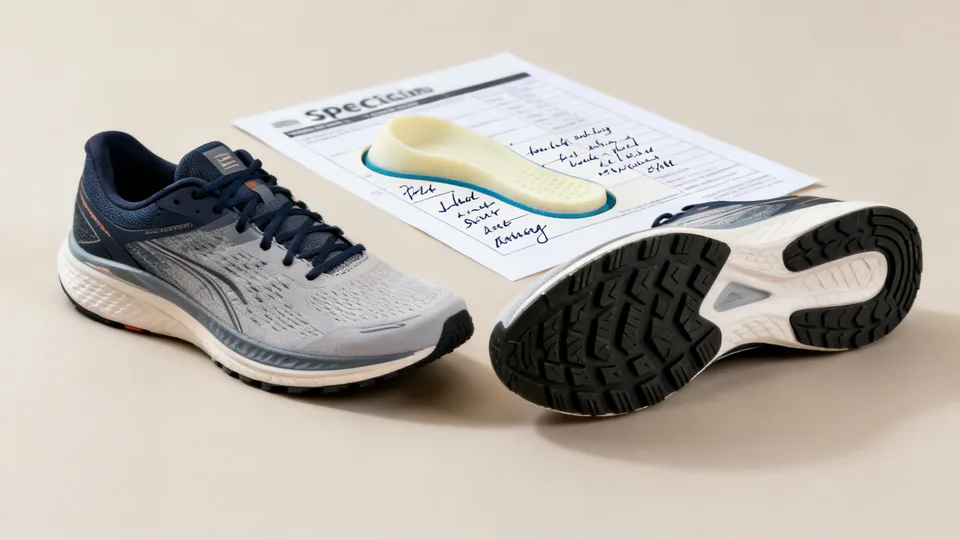
I pulled our running shoes specification guide — a document that lists seven different "standard" size runs depending on the customer type and model category. Sports retailers typically get one distribution. University teams get another. The word "standard" was doing a lot of heavy lifting.
I picked the one closest to their historical orders and moved on.
I should've picked up the phone. I didn't.
On Monday morning, the trucks dropped. The running shoes arrived first. Then the regional depot shipment — 35 pairs of running shoes stacked in the middle of a pallet that had taken a rough ride in a shared truck.
The shoes themselves were fine. No scratches, no marks.
The boxes were another story. Crushed corners. One entire side panel split open. The kind of damage that looks like a shipping error but might as well be a branding failure.
You might think packaging doesn't matter that much. But if you've ever unloaded a delivery in front of a retail buyer, you know exactly how much it matters. That first glance — the moment they see dented cartons — is when they make a judgment about your entire operation.
The question wasn't just about 35 pairs. It was about whether the other 225 would get the same scrutiny. And whether this customer would trust us with their next rush order.
The Fix, and the Call I Should Have Made on Saturday
At 1:00 PM on Monday, I made two calls.
First, I reached out to a colleague who runs abulk shoe care service for our overflow inventory. I'd worked with her on restoring returned stock before. She had a team at our warehouse by 2:00 PM. We pulled all 35 pairs, cleaned the uppers, checked for scuffs, and repacked them in fresh original-brand boxes we had in stock from a cancelled order the month before.
Second, I called the client.
I explained the situation: the standard size run we shipped didn't match their actual "standard" — which turned out to be a narrower mid-range (sizes 9 through 11 dominant, not the slightly wider spread I'd assumed). I told them we had enough inventory to swap the mismatched pairs before the truck left on Tuesday morning.
There was a pause. Then she said: "As long as I have every pair by noon on Tuesday, we're fine."
Not ecstatic. Not angry. Just the flat, measured tone of a buyer who's reserving judgment.
I get it. I've been there.
Here's the thing I learned that Monday: one word — standard — can mean at least seven different things in our system alone. Per ISO 9407:2019, the international standard for footwear sizing (Mondopoint), shoe sizes are defined by foot length in millimeters. A men's US 9 equals roughly 270mm. But in practice, what a client means by "size 9" depends on whether they're pulling from US, UK, or EU charts — and sometimes whether they're ordering for men's or women's models. I called back to confirm the base; they clarified they were talking about men's US sizing. That one question saved me a potential full re-pick.
We packed until 9:00 PM on Monday. All 260 pairs were on the truck by 7:00 AM Tuesday. By 11:15 AM, the client's warehouse had received every box — intact, barcoded, and counted.
What the Rush Order Actually Taught Me
The order was worth $22,500. The campaign launched without a hitch. The client sent me a string of emojis and a short note: "Faster than our usual distributor, and the boxes actually look new."
But I've been chewing on this one for months now. Not because we pulled it off — but because we almost didn't. Here's what I'd tell anyone in B2B sports distribution:
1. Ten minutes of confirmation beats ten hours of rework.
It's tempting to think rush orders are about speed — faster picking, faster packing, faster trucks. But the speed that actually matters happens at the front end. The size run. The colorway. The exact model. If I'd spent ten minutes on Sunday confirming every detail in that specification guide instead of assuming "standard" meant one thing, we'd have skipped the entire boxing crisis. In urgent buy-side ops, the bottleneck is never picking speed. It's specification clarity.
2. You can't save your way to quality.
That $400 we spent on rush bulk shoe care and replacement boxes? It felt painful at the moment. But it protected $22,500 in revenue — and more importantly, it protected the customer's perception of the products we ship. When a retail buyer opens a carton, they're not just evaluating the shoes. They're evaluating whether we can be trusted with the next order. Quality isn't just about the product; it's about what the customer believes about you before they even take the shoes out of the box.
3. Always have a Plan B, C, and D.
For this order, we had spare inventory lined up at three different locations, a backup bulk shoe care team on call, and a last-resort plan to source replacement boxes from a partner warehouse. We didn't use all of them — but knowing they existed meant we could move fast without panicking. Rush orders fail when coordinators don't have a fallback. They succeed when you've already mapped out what "bad" looks like and what you'd do about it.
The same principle applies whether you're sourcing adidas running shoes for a regional retailer, adidas basketball shoes for a university program, or pulling from a soccer cleats manufacturer to round out a seasonal push. Rush isn't a speed contest. It's a risk-management exercise.
And the biggest risk? Assuming the word "standard" means the same thing to everyone on the email chain.
Trust me on that one.

Jane Smith
I’m Jane Smith, a senior content writer with over 15 years of experience in the packaging and printing industry. I specialize in writing about the latest trends, technologies, and best practices in packaging design, sustainability, and printing techniques. My goal is to help businesses understand complex printing processes and design solutions that enhance both product packaging and brand visibility.