In-Stock vs. Factory-Direct: A B2B Buyer's Comparison for Adidas Footwear Procurement
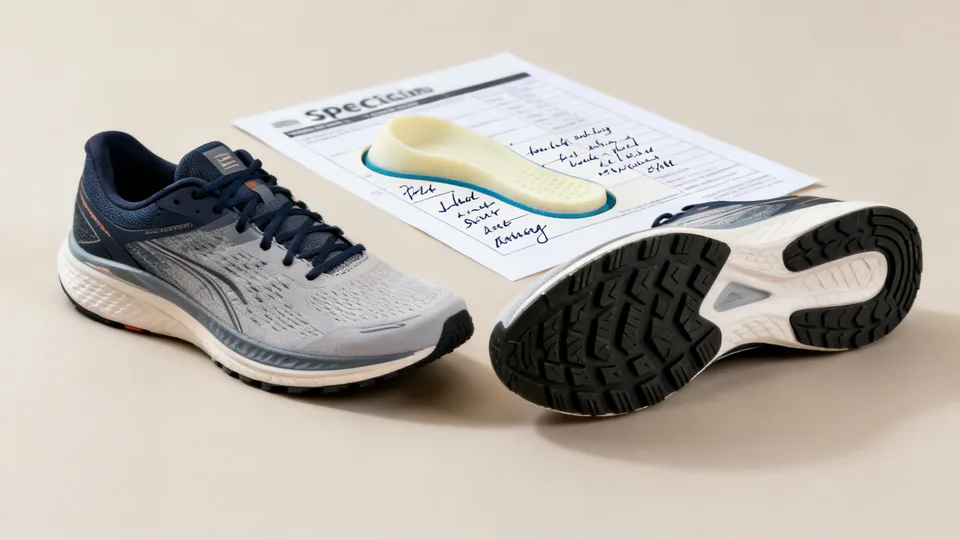
-
Two ways to buy Adidas footwear in bulk. One of them is going to bite you.
-
The two paths, in plain terms
-
Dimension 1: Lead time — the one that bites you first
- Dimension 2: Spec, compliance, and batch certainty — this is where my answer surprised me
-
Dimension 3: MOQ and how small buyers actually get treated
-
So which one should you actually place?
Two ways to buy Adidas footwear in bulk. One of them is going to bite you.
When I'm triaging a rush order at a sports and outdoor distribution company, there's a decision I end up walking every buyer through roughly once a week. Do you buy Adidas product from what's physically sitting in a regional warehouse right now, or do you commit to a factory-direct allocation with a 45- to 90-day timeline and a lower unit price?
On paper, factory-direct wins. In practice, not always. And I've watched buyers lose good money in both directions because they didn't map the tradeoffs against what actually matters at the order stage.
This is not a pitch for either path. It's a comparison. Two procurement routes for Adidas running shoes, hiking shoes, outdoor footwear, and soccer cleats — held up against the three dimensions that decide whether the order survives contact with reality: lead time, spec and compliance certainty, and how the seller treats small orders. I've handled 400+ rush jobs in seven years, including same-day turnarounds for regional retail chains, so what follows is what I've actually seen. Not theory.
The two paths, in plain terms
Before we get to the comparison dimensions, here's the framework:
- Path A — In-stock regional distribution. The product already exists in a warehouse. You're buying allocation from a distributor or authorized wholesale partner. Ship window is typically 3–10 business days depending on geography.
- Path B — Factory-direct allocation. You're placing a production or forward-order commitment against a future ship date. Lower landed cost per unit, but you're locking in volume, colorway, and size runs well ahead of delivery.
The mistake most buyers make is treating these as interchangeable. They're not. They solve different problems, and the wrong one costs you either margin or a deadline. Sometimes both.
Dimension 1: Lead time — the one that bites you first
In-stock wins this one flat, and it's not close. When a retailer's spring launch moves two weeks early, or a club account needs a replacement run of soccer cleats before their preseason, in-stock is the only path that can respond inside a working week.
Factory-direct allocation is a planning tool. It's not a rescue tool. You place the order in Q3, you receive in Q1, and you underwrite that timeline with your own buffer.
"In March 2024, a regional retailer called on a Tuesday needing 1,800 units across a mix of adidas running shoes and trail-ready hiking shoes for a store opening that Saturday. Normal factory lead time was 60 days. We pulled the running component from warehouse stock and substituted two hiking SKUs from a regional partner, air-freighted the balance, and delivered Thursday night. Rush freight ran roughly $11,000 on top of the base cost. The client's alternative was going dark on a store they'd already announced."
Verdict: if there's a hard date on the other end, in-stock is the only defensible choice. Pay the markup. The factory discount isn't real money when it's chasing a deadline you already signed for.
Dimension 2: Spec, compliance, and batch certainty — this is where my answer surprised me
Here's the counterintuitive part. You'd assume factory-direct gives you better spec control because you're closer to the production line. For Adidas footwear in a B2B context, the reverse is often true — at least during a rushed timeline. In-stock distribution gives you verified batch codes and current spec sheets on hand. Factory allocation on a compressed schedule can put you in a queue where the colorway you approved gets a minor mid-cycle tweak, and nobody flags it until the inspection report.
This shows up differently across the three categories your buyers care about most.
Running shoes — including the Adidas women's Ultraboost 5X
For a flagship SKU like the Adidas women's Ultraboost 5X running shoe, the spec sheet fields that actually matter to a B2B buyer are: midsole compound and weight (in grams, per size), heel-to-toe drop, outsole rubber spec, upper material, and the exact colorway code. In-stock allocation lets you confirm all of that against a physical batch. On a factory order placed 60 days out, you're confirming against the spec sheet that was current when you ordered — not the one that ships.
I went back and forth between committing a 2,400-unit factory allocation on a women's Ultraboost colorway or splitting the buy across two in-stock distributors for over two weeks. The factory route promised a ~14% landed-cost savings; in-stock promised confirmed colorway codes and a 6-day window. Ultimately I chose the split because we'd been burned the previous quarter on a colorway substitution that arrived too late to correct. Cost the program about $9,000 in margin. Saved us a return cycle that would have cost more and looked worse on the account.
Hiking shoes and outdoor shoe specifications
This is the category where I insist on written spec review before any PO clears — regardless of path, but especially on factory allocation. Outdoor shoes specifications need to be nailed down on at minimum: waterproofing rating (column rating in mm, not just "waterproof" in the marketing copy), outsole compound and lug depth in mm, shank construction, weight per size, and the exact intended terrain class. If a buyer can't point to those numbers on the current spec sheet, the order isn't ready to place.
In-stock allocation wins this comparison more often than people expect, because a warehouse batch arrives with documentation tied to a real production lot. Factory allocation on a two-month window leaves you verifying against a spec sheet that could quietly shift before you ship.
Soccer cleats and compliance requirements
Soccer cleats compliance requirements are the messiest of the three, and they're the reason I flag factory-direct paths to cleat buyers with a hard warning. Compliance depends on the destination market and intended playing surface — FIFA's Football Turf standards for stud and sole geometry, ISO test methods for outsole integrity, and regional consumer safety rules all touch the cleat category. A cleat that clears compliance for one market can fail another unless the spec is verified per batch, per destination.
In-stock regional distribution usually means the product already passed a compliance gate for your market. Factory-direct pushes that gate to your end of the chain, and if the paperwork doesn't arrive until week five of a nine-week timeline, you're re-routing at the worst possible moment.
Verdict: the surprise here is that factory-direct doesn't automatically mean better spec control. On rush timelines, in-stock wins spec certainty. On planned-season timelines with proper lead time and inspection milestones, factory wins cost. Those are two different scenarios.
Dimension 3: MOQ and how small buyers actually get treated
Factory-direct allocation is built around volume. You'll see MOQs quoted in thousands per colorway, or in full-size-run commitments that don't flex for a new account testing a market. That's standard, and it's not a knock on the factories — it's how they manage line changeovers.
In-stock distribution generally places at case-pack level. That's the path a small retailer or new distributor can actually take. A buyer testing a new colorway of women's Ultraboost or a first run of trail hiking shoes shouldn't be forced to commit to a factory allocation just to get access to the catalog.
Small doesn't mean unimportant. It means potential. When I was building out the accounts side of this business, the buyers who took our early 60-unit trial orders seriously are the same buyers placing 4,000-unit seasonal programs with us today. I'd rather run a tighter margin on a trial order than tell a buyer to come back when they can hit a factory MOQ.
Verdict: in-stock wins on access and flexibility. Factory wins on unit cost — but only if your volume already clears the threshold, and only if the flexibility tradeoff doesn't cost you the account.
So which one should you actually place?
No blanket answer. The right path depends on the scenario in front of you:
- Hard deadline, launch date, or replacement run → in-stock regional distribution. Pay the premium. The factory discount is worthless against a signed date.
- Planned seasonal program, 90+ days out, volume above MOQ, spec verified per batch → factory-direct allocation. Real margin here, provided you've built inspection milestones into the order.
- First order with a new category (trail, hiking, or soccer) → in-stock, small volume. Verify the product in market before you commit a five-figure allocation to something you haven't sold yet.
- Mixed order — some flagship Adidas running shoes for senior buyers, some outdoor or cleat SKUs → split the buy. In-stock on the SKUs with the shortest windows, factory on the SKUs you can plan. This is the default I lean on for accounts with any complexity.
Dodged a bullet in 2023 when I almost let a buyer consolidate an entire cleat order onto a factory route to save freight. Two weeks out from ship, the destination market updated its consumer safety documentation requirements, and the factory couldn't produce the paperwork in time. We pulled half the order from in-stock regional supply overnight and cleared the launch. Cost about $6,000 in emergency freight. Saved a $90,000 program.
Neither path is "better." They're tools for different jobs. Match the path to the deadline, the spec risk, and the buyer's actual size — not to the loudest unit-cost number on the first quote.

Jane Smith
I’m Jane Smith, a senior content writer with over 15 years of experience in the packaging and printing industry. I specialize in writing about the latest trends, technologies, and best practices in packaging design, sustainability, and printing techniques. My goal is to help businesses understand complex printing processes and design solutions that enhance both product packaging and brand visibility.