Adidas B2B Sourcing: Choose the Right Category and Supplier by Scenario, Not by Catalog
-
There's no single 'best' Adidas sourcing plan—it depends on which scenario you're in
-
Scenario A: Running-first channel — breadth matters more than depth
-
Scenario B: Team sport specialization — soccer cleats are a spec game
-
Scenario C: Hiking/outdoor positioning — fewer models, harder specs
-
Scenario D: Seasonal/casual mix — sandals are the quiet revenue line
-
How to tell which scenario you're actually in
There's no single 'best' Adidas sourcing plan—it depends on which scenario you're in
I ended up managing sports equipment purchasing in 2020—not because I wanted to, but because our office administrator role grew into it after the company expanded to three locations. My background was office supplies and furniture, not footwear. Our first big project was roughly 400 pairs across three offices, funded through a wellness program. Sounded straightforward.
It wasn't.
The request was "get running shoes." Then it turned into: which models, what size curve, do soccer cleats and hiking shoes go on the same purchase order, is a sandal an athletic shoe or casual footwear?
I didn't understand the problem until I made it. We consolidated everything into one order and roughly 34% of the shoes were US-size 9–10 because that's what the previous spreadsheet showed. Turned out the previous spreadsheet was from a different department with a different workforce. We ended up with a pile of large running shoes and a lot of redistribution requests.
That's when I stopped thinking in terms of "one product catalog" and started thinking in terms of scenarios. The 12-point checklist I built after that first mess has probably saved us $6,500 in rework—maybe more, I'd have to pull the exact accounting. But the point isn't the number. The point is that B2B sourcing doesn't have one correct answer. What you buy depends on who you sell to, the scale, and how technical the category is.
Here are the four scenarios I use to frame every purchase decision: running-first retail, soccer/team sport specialization, hiking/outdoor positioning, and seasonal/casual mix. Let's walk through each.
Scenario A: Running-first channel — breadth matters more than depth
If you're serving general fitness consumers—gym-goers, casual joggers, people buying their first athletic shoe—your sourcing portfolio should lean heavily on running. The reason is simple: turnover is fast. People replace running shoes every 6–12 months, and brand recognition does a lot of the selling for you.
Here's the counterintuitive part. In this scenario, I'd argue breadth beats depth. Most buyers in this category over-order their top model and under-order the mid-tier. When I made that 400-pair order, I locked in three models that covered about 80% of the demand and left the rest to a single mid-tier option. Three months later, we were doing emergency restocks because the mid-tier sizing ran out faster than anyone projected.
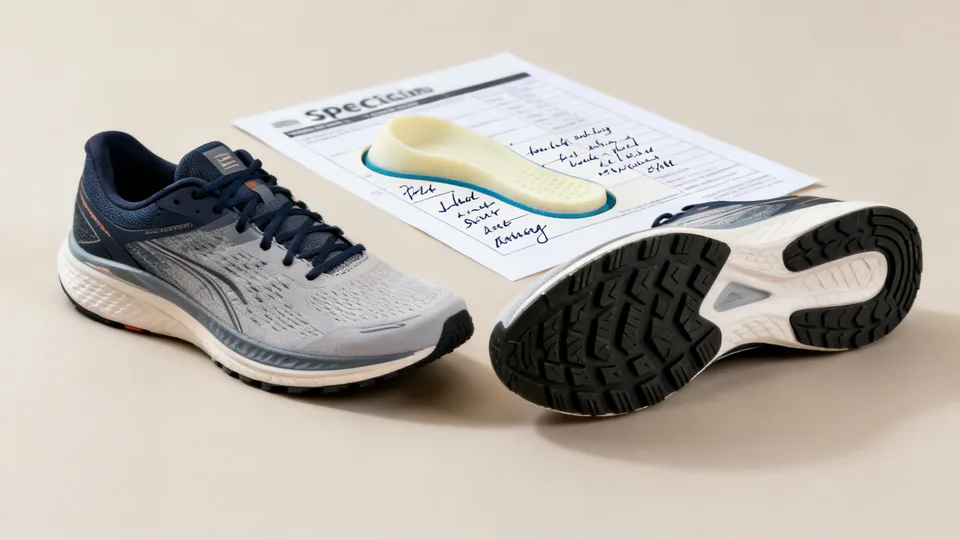
Adidas women's Response 2 running shoes is one I wish I'd stocked more carefully. It's identifiable, sits at a mid-range price point, and has a good size range. It's not the flagship. That's exactly why it moves—it's approachable for buyers who want the brand but aren't ready for the premium tier.
My scenario-A checklist:
- Verify the size curve before the first PO. Don't inherit a spreadsheet from another department (I learned that the hard way).
- Order across 4–6 SKUs, not just 2–3 hero models.
- Ask for size-run samples before committing. I skipped this once and had 12 returns in the first month.
- Confirm restock lead times in writing, not verbally.
Scenario B: Team sport specialization — soccer cleats are a spec game
If your market runs on clubs, schools, or local leagues, the whole sourcing logic changes. In soccer, the first filter is surface type, not brand.
Most buyers—including me, early on—assume "soccer cleats" is a single category. It's not. FG (firm ground), SG (soft ground), AG (artificial grass), and indoor models have different outsole constructions. Specifying "standard" on a PO is, frankly, a way to guarantee problems.
That's exactly what happened in March 2023. We confirmed an order for 2,000 units with the specification "soccer cleats, standard." The supplier read that as FG. Our client—a school district—needed AG for their artificial turf fields. FG on synthetic grass wears down much faster. We had to process refunds and replacements right before season start.
Now I treat this category differently. When evaluating a soccer cleats manufacturer, I ask four questions before I even look at price:
- Can you supply FG, SG, AG, and indoor variants under the same program?
- What is the outsole construction—glued or injection-molded? (Glued is fine for dry conditions but degrades in wet ones.)
- What is the minimum run per colorway and per size curve?
- Can you provide youth size ranges down to US 1 or below?
One more thing: don't assume an in-stock warehouse translates into factory capacity. In early 2024, a supplier showed me full inventory photos and then missed a reorder deadline by three weeks because the actual production line was committed elsewhere. Now I always ask to see the production schedule, not just the stock report.
Scenario C: Hiking/outdoor positioning — fewer models, harder specs
Hiking is the category where brand recognition matters least and technical specification matters most. Buyers care about waterproofing, outsole grip, ankle support, and weight. If you're serving outdoor and hiking markets, this is where I reverse my scenario-A advice.
Fewer models, deeper stock. I've found that 5 strong hiking models outperform 15 scattered ones. Outdoor buyers tend to be repeat purchasers with specific preferences. They don't browse—they replace what broke.
But the spec sheet has to be specific:
- Waterproofing: Ask whether "waterproof" means a membrane construction or a water-resistant coating. These are marketed interchangeably and they are not the same thing.
- Outsole compound: Rubber is not a single material. Ask for the compound category and grip rating.
- Ankle support height: Mid-cut vs. low-cut is a real difference. Mixing this up on a reorder cost us about 40 returns.
Here's the prevention lesson that matters most in this category—and honestly, the one I still feel dumbest about. We required test reports for every new hiking model in our initial outdoor launch. But we didn't re-request test reports on the reorders. A supplier swapped outsole compounds between runs—same model name, different grip characteristics. Nobody noticed until three shoes came back during the same hiking season.
Prevention over cure isn't a slogan. It's a re-verification habit. If you change nothing else, build a re-verification step into every reorder.
Scenario D: Seasonal/casual mix — sandals are the quiet revenue line
Athletic sandals are the most under-examined category in B2B sourcing. Nobody puts them at the top of their priority list. But if you're doing retail or distribution, they're quietly one of the highest-contribution summer categories.
They're also the easiest to get wrong. Sandals attract less scrutiny than running or hiking, and it's easy to buy what looks like an athletic sandal but doesn't survive the first wet day.
If you're evaluating what to look for in an athletic sandals supplier, this is the list I actually use now—not an official standard, just the one I built after a few small mistakes:
- Upper material: EVA vs. rubber. EVA is lighter but softens in prolonged sun. Rubber is heavier but more durable. Ask which one is in the spec—not "they're all the same."
- Footbed: Removable vs. molded. Removable is easier to clean, but shifts more. Molded holds up better but is harder to sanitize.
- Buckle hardware: Plastic buckles fail at the eighth or ninth use in my experience. Metal or reinforced plastic is worth the small cost difference.
- Packaging: If sandals arrive in polybags, the retail box gets crushed, and that affects return rates more than most buyers assume.
- Humidity testing: Ask for a humidity/moisture test report before ordering. A cheap sandal that smells after the first wearing is not a cheap sandal by the time returns are processed.
If a supplier makes sustainability claims about recycled EVA or "eco-friendly" materials, it's worth checking whether those claims meet current FTC Green Guides standards (16 CFR Part 260). Environmental claims that can't be substantiated create return risk and, potentially, compliance risk. It's not the supplier who eats that risk—it's you.
One mistake I'd flag here: for our first summer sandal order, I picked a supplier on price because it was a promotional channel and I figured "cheap is fine." Finance rejected the expense report because the vendor provided handwritten receipts only. I ate $2,400 out of the department budget. Now invoice compliance is my first filter, not my last.
How to tell which scenario you're actually in
If you only source one category, this is easy. If you're sourcing across multiple—and most B2B buyers eventually will—here's the decision sequence I use:
First, identify the dominant category. Running, soccer, hiking, or sandals. If you can't name it clearly, you're not ready to source yet. You're ready to clarify scope.
Second, look at your channel. General fitness consumers (Scenario A), team sport buyers (Scenario B), outdoor/hiking (Scenario C), or seasonal/promotional (Scenario D). The channel dictates both the product specs and the supplier type you should be talking to.
Third, assess your volume structure. Small-batch, multi-SKU (A and small-volume D). Mid-volume, spec-precise (B and C). Large-volume, narrow-range (D, if you can commit).
Fourth, determine whether you're buying as a category or as a task. Category buying (keeping a channel stocked) prioritizes restock speed and inventory flexibility. Task buying (outfitting a specific team, event, or client) prioritizes technical specs and supplier reliability.
The one rule that applies to every scenario: verify specification and invoice compliance before you commit. The upside from finding the lowest price is real, but it's smaller than the downside from a rejected expense report or a mislabeled shipment. Five minutes of verification beats five days of correction—every single time, in my experience.

Jane Smith
I’m Jane Smith, a senior content writer with over 15 years of experience in the packaging and printing industry. I specialize in writing about the latest trends, technologies, and best practices in packaging design, sustainability, and printing techniques. My goal is to help businesses understand complex printing processes and design solutions that enhance both product packaging and brand visibility.