Adidas Running Shoes and OEM Sourcing: A B2B Buyer's No-Fluff FAQ
-
1. When sourcing adidas running shoes for B2B, what should you verify?
-
2. Is the adidas women's Duramo Speed 2 a fit for a distributor's stock plan?
-
3. How do you evaluate outdoor shoes manufacturers without getting sold?
-
4. What actually differentiates athletic sandals manufacturers?
-
5. Shoe care OEM: what should you ask before signing?
-
6. Which hidden costs bite hardest on rush orders?
-
7. One piece of advice for a new B2B footwear buyer?
B2B footwear sourcing throws the same questions at buyers every season. Most answers online either repeat marketing copy or dodge specifics. I coordinate rush orders for a sporting goods distributor. Over the past six years I've handled 300+ emergency purchase runs, including same-week turnarounds for retail chain clients and last-minute top-ups for regional event sponsors. Below are the questions I get asked most—with the answers I actually give.
1. When sourcing adidas running shoes for B2B, what should you verify?
Look, the brand name isn't the question. Everyone recognizes adidas. What matters is whether you are authorized to sell it in your territory, and whether your supplier can prove that chain of custody.
Three things I check before anything else:
- Distribution rights documentation. Not a screenshot. An actual authorization letter listing your territory and channel. I've watched buyers lose account status because their "authorized" supplier was three layers removed from the brand.
- Channel code on the shoebox label. Regional codes differ. If the carton says one region and the invoice says another, you have a gray-market problem waiting for customs.
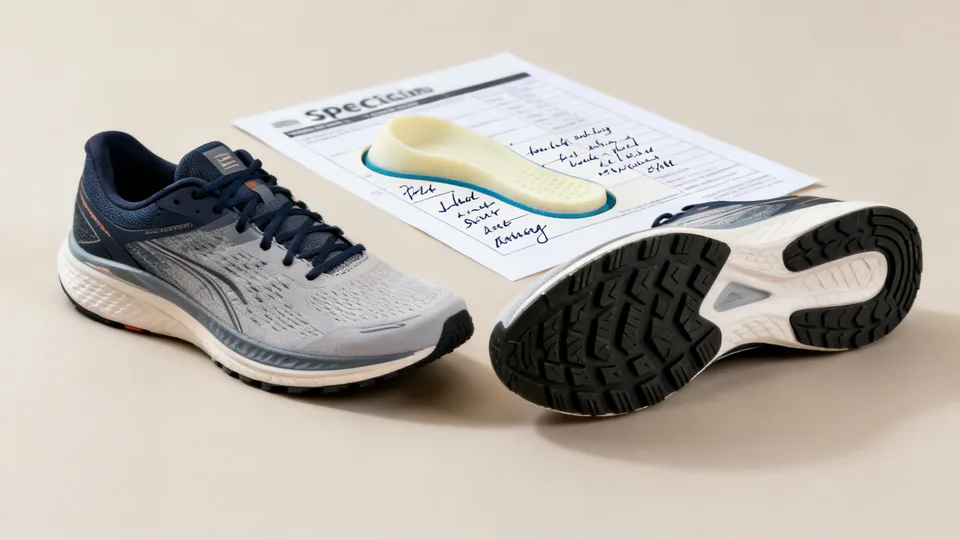
- Size chart consistency across SKUs. When I compared sample pairs from two different adidas running shoe lines side by side, I finally understood why our return rate was 4.1% on one line and 1.2% on the other—same labeled size, different last width. Ask your supplier to confirm the last spec before you place a bulk order.
Miss any of those three, and no discount is worth the headache.
2. Is the adidas women's Duramo Speed 2 a fit for a distributor's stock plan?
Depends on who you're distributing to. The Duramo Speed 2 sits in the entry-tier speed trainer slot—below the Adizero range and above the base Duramo. It's aimed at beginner runners, gym-goers who want something responsive without a race-day price tag, and casual 5K-to-10K runners.
That typically means:
- Strong sell-through in price-sensitive retail channels
- Seasonal peaks around spring race season and back-to-school for high school track
- Weaker demand from specialty running stores, who usually push customers up to Adizero
Last November, a retail chain client called us four days before Black Friday needing a 300-pair top-up in specific colorways. We filled it—but only because the size run matched what we already had in transit. That's the kind of demand spike this SKU generates. If your account base is mostly mid-tier sporting goods stores, it's a reasonable volume play. If you're serving running specialty shops, don't over-index—you'll end up discounting.
One thing I wish I'd tracked more carefully: colorway-specific sell-through. My gut says white/black moves twice as fast as accent colorways in this tier, but I don't have hard data across enough regions to make that a rule. Ask your accounts before you commit to a mixed-colorway order.
Also—confirm the women's last spec with your supplier. This is a lower-tier SKU, but sizing mismatches are still the number one source of B2B footwear returns, especially when women's lasts and unisex specs disagree.
3. How do you evaluate outdoor shoes manufacturers without getting sold?
One rule: ignore the pitch deck, ask for the mold room.
An outdoor shoes manufacturer that owns its outsole molds will show them to you without blinking. A trading company posing as a factory will stall, promise photos, then send stock images. That single question filters out half the suppliers I come across.
After that, here's the checklist I run:
- Outsole rubber hardness. Ask for shore hardness test values by compound. Below 60A on wet pavement is a red flag for slip.
- Waterproofing test data. A video of a shoe under a faucet is not a test. You want a hydrostatic head number or a complete immersion report from a third-party lab.
- Midsole bonding process. I learned this one the hard way. They warned me to audit the bonding line before approving a rush order. I didn't listen—I approved based on samples alone. Three months later we were sorting through a 6% defect rate on midsole separation in the first shipment. That $1,800 in rework could have been a $200 factory audit.
- Production flexibility. Can they run a 500-pair emergency batch on 10 days' notice? Ask what their largest rush order was last quarter. If they hesitate, the answer is no.
Outdoor shoes live and die on sole construction. Everything else is cosmetic.
4. What actually differentiates athletic sandals manufacturers?
Strap attachment and midsole construction. That's where the failures happen.
The sandal complaints that land on my desk almost always trace back to one of two issues: a strap pulling out of the midsole at the anchor point, or a compression-set midsole flattening after 40 miles of wear. So when I evaluate a manufacturer, I ask three questions:
- How are the straps attached? Glued-only anchors will fail. Stitched-plus-glued or mechanical anchors (rivets, molded-in loops) are the ones that hold up.
- Who molds the buckles and EVA components? In-house molding typically means better dimensional consistency. That said, I don't have industry-wide breakage rates. Anecdotally, factories that mold in-house had roughly half the strap failures in our last three years of sampling—but that's our data, not a universal rule.
- What's the slip resistance rating? Ask for the test standard (ASTM F2913, SATRA, or equivalent) and the actual coefficient of friction. A datasheet without numbers is marketing copy.
If the factory can walk you through their anchor-point design and show you a third-party abrasion report on the footbed, you're probably talking to a real manufacturer. If they send you a catalog and a price list, keep looking.
5. Shoe care OEM: what should you ask before signing?
Four things: MOQ per SKU, formula exclusivity, packaging compliance, and lead-time flex.
The MOQ question isn't about getting the lowest number. It's about whether the factory can run a small first order at a reasonable unit cost so you can test the market before committing. A supplier that insists on 5,000 units per SKU for a first-time private label program is either very busy or not very flexible. Neither is a great sign for a new partnership.
Formula exclusivity matters more than most buyers realize. If two of your competitors end up with the same "proprietary" cleaner formula and the same bottle shape under different labels, your brand story falls apart. Ask for a written exclusivity clause that covers formula and packaging artwork for your territory.
Packaging compliance is the hidden cost. I compared two shoe care OEM quotes side by side—one 22% cheaper on paper—and finally understood the difference was in the fine print. The cheaper quote excluded label compliance testing, child-resistant closures, and carton marking fees. By the time we added those line items, the "savings" had shrunk to 4%. Ask for the "what's not included" list before you ask for the price.
6. Which hidden costs bite hardest on rush orders?
Air freight is the obvious one. Here are the three that surprise people:
- Factory overtime surcharges. Not the quoted hourly rate—the flat per-batch fee many factories add when you push a run into weekend shifts. Ask about this before you approve a rush.
- QC inspection expediting. Third-party inspection agencies charge a premium for same-week scheduling. On a $12,000 rush order last quarter, we paid an extra $340 just to move the inspection up four days. That wasn't in the original quote.
- Warehouse receiving window fees. If your delivery arrives outside the retailer's inbound appointment window—because the shipment slipped by two days—you eat the detention or rescheduling charge. We budget a 48-hour buffer on every rush order for exactly this reason.
Here's the thing: the cheapest rush quote is almost never the cheapest rush order. The vendor who lists every fee upfront—even if the total looks higher—usually costs less in the end.
7. One piece of advice for a new B2B footwear buyer?
Get the "what's not included" list in writing. Before you ask for the price. Before you ask about lead time. Before anything.
Everything else is negotiable. That one isn't. Ask three suppliers for the same rush order with a full cost breakdown, and you'll spot the pattern in ten minutes.
Simple.

Jane Smith
I’m Jane Smith, a senior content writer with over 15 years of experience in the packaging and printing industry. I specialize in writing about the latest trends, technologies, and best practices in packaging design, sustainability, and printing techniques. My goal is to help businesses understand complex printing processes and design solutions that enhance both product packaging and brand visibility.